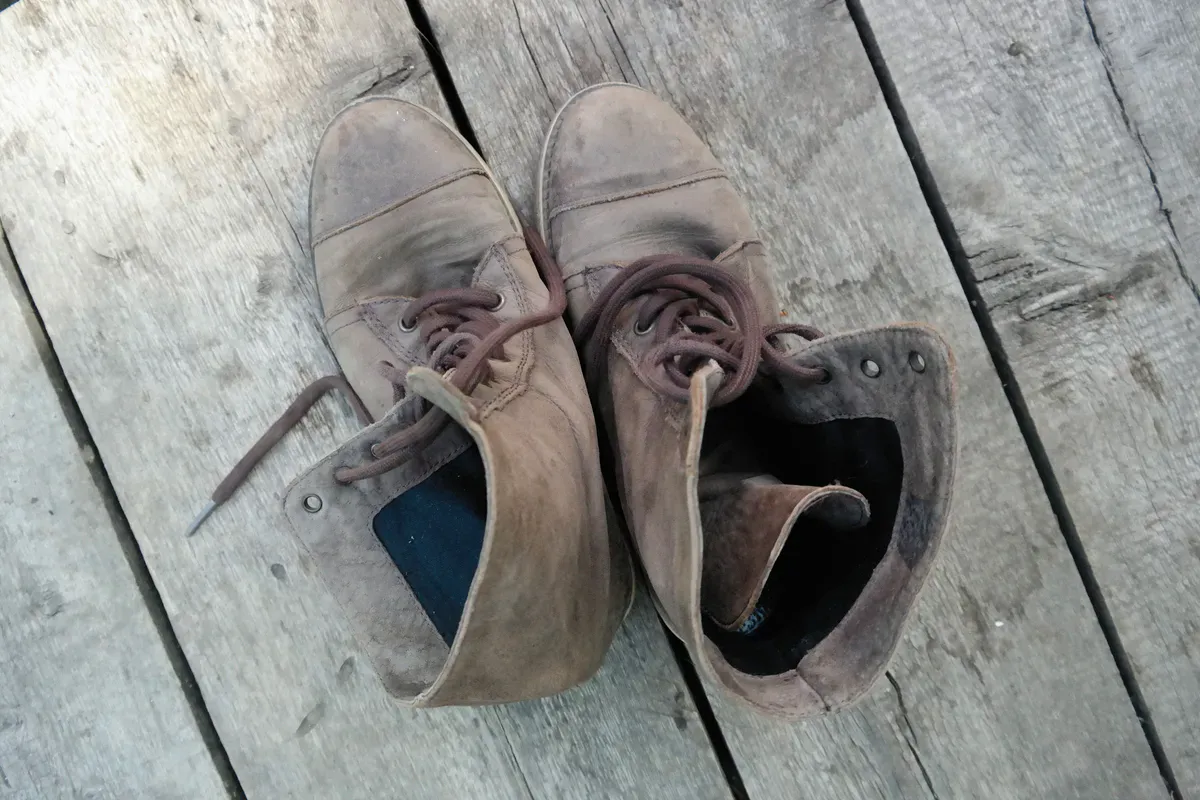
The construction sets the lifespan
Flip a boot over and you are looking at its retirement plan. Most affordable work boots are cement construction: the sole is glued to the upper. Glue joints are fine until they are not, and when the sole wears through or peels, the boot is done. There is nothing to rebuild.
Welted and stitch-down boots attach the sole by stitching through a strip of leather you can see running the boot's perimeter. That stitching is the whole point. A cobbler can cut the old sole off and stitch a new one on, keeping the upper, which by then is broken in exactly to your foot. The upper is the part worth money. Welt construction lets you keep it.
What actually kills boots early
- Heat drying. Wood stoves, truck heaters, and radiators cook the oils out of leather and crack it. Wet boots want air, cedar, or a low-heat dryer, never a heat source.
- No rotation. Leather needs a day to dry out from foot sweat. Daily wear of one pair, especially in summer, rots stitching and liner from the inside. Two pairs rotated outlast three pairs worn one at a time.
- Never conditioning. Dry leather cracks at the flex points. A conditioning pass every month or two for hard outdoor use keeps the flex zones alive.
- Wrong boot for the surface. Soft sticky soles built for roofing grind away fast on concrete and gravel. Surface mismatch can halve a sole's life.
The resole math
A resole typically runs a fraction of the price of a new premium boot. If you paid real money for a welted pair, one resole roughly doubles the boot's working life for a third of the replacement cost, and you skip the break-in entirely because the upper is already shaped to you. Two resoles is common on a well-kept pair. Cemented boots do not get this option, which is the honest argument for spending more up front if your trade does not destroy uppers.
The exception: if the upper itself is cracked through, torn at the eyelets, or the safety toe has taken a real hit, the boot is finished regardless of construction. Resole a good upper, never a spent one.
Signs it is time
- Tread worn slick where you push off. Traction is the first safety feature to quietly disappear.
- New aches in a boot that used to be fine. A compressed midsole does not bounce back.
- Cracks across the flex point that go through the leather, not just the finish.
- Any serious impact to a safety toe. The cap did its job once. It does not get a second round.
Common questions
How long should work boots last?
Hard daily trade use wears through most cement-construction boots in six months to two years depending on the job. A welted boot can go years longer because the sole is replaceable. Surface, season, and how you dry them swing the number as much as the brand does.
Is it worth resoling work boots?
Only welted or stitch-down boots can be resoled properly, and for a quality pair it usually beats replacement. A resole costs a fraction of a premium boot and the broken-in upper is the part you want to keep anyway. Cemented soles are glue-and-replace territory.
When should I replace work boots?
When the tread is slick where you push off, when the midsole stays compressed and your feet ache in a boot that used to be fine, when the upper cracks through, or when a safety toe takes a real hit. A struck safety toe is done even if it looks fine.